
Work / Logistics
Shipment updates, POD matching and freight invoice checks on autopilot
Proof-of-delivery matched to shipments, customers told about progress and delays on WhatsApp, and carrier invoices checked against rate cards.
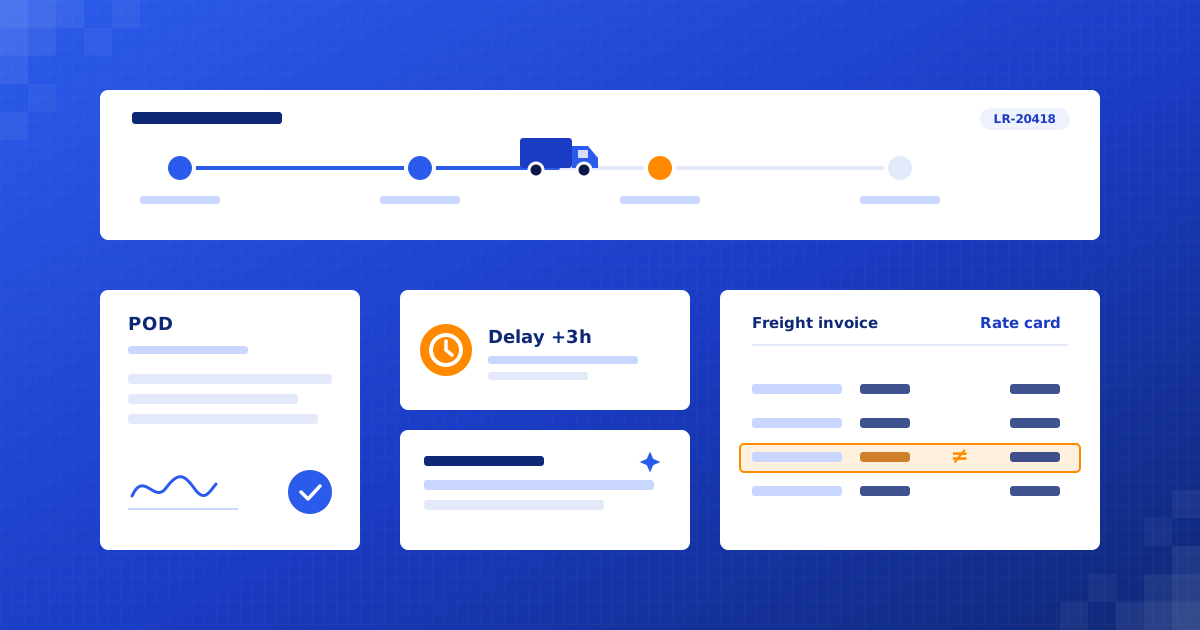
The problem
A mid-sized road freight and 3PL company in Rotterdam handling around 1,500 B2B shipments a month across the Benelux and Germany, using its own trucks and partner carriers.
- Tell customers about progress and delays before they have to ask.
- Match every POD to its shipment the day it arrives so invoicing is not held up.
- Check every carrier invoice line against the agreed rate card before payment.
How it works
Shipment Autopilot, step by step
- 01Collect status eventsn8n + TMS API + OpenAI API
- 02Build one timeline per shipmentPostgres + n8n
- 03Proactive customer updatesWhatsApp Business API + Postmark
- 04Delay detection and alertsn8n + Slack
- 05POD capture and matchingGoogle Document AI + TMS API
- 06Ready-to-invoice triggerExact Online + Freshdesk
- 07Carrier invoice reconciliationDocument AI + Google Sheets rate cards + n8n
- 08Approve or disputeExact Online + Gmail
Full project details +Hide details −
The situation
Shipments are planned in a TMS, but tracking updates come from drivers and partner carriers by phone, email and WhatsApp. Proof-of-delivery photos arrive in a shared inbox and are matched to orders by hand. Partner carrier invoices are checked line by line against rate cards in Excel, and many are simply paid.
Customer service spends most of the day answering 'where is my shipment?' calls and emails.
PODs arrive as blurry photos with no reference, so matching them to shipments and billing is slow.
Customers hear about delays after the delivery window has passed.
Carrier invoices with wrong rates, surcharges or duplicate lines slip through because checking them is tedious.
Each step
1. Collect status events. Pickups, departures and deliveries come in from the TMS, driver app scans and partner carrier emails. Carrier emails in Dutch, German or English are read and turned into structured events.
2. Build one timeline per shipment. Events are matched to the shipment by reference, licence plate or consignee. Duplicate events are dropped and unmatched ones go to a small review list.
3. Proactive customer updates. The consignee or customer contact gets a short update at pickup and on the day of delivery, by WhatsApp where they opted in and by email otherwise. Each customer can choose how much they want to hear.
4. Delay detection and alerts. If the live ETA moves past the delivery window, or a truck has not moved for too long, the planner is alerted first. Unless they intervene within a set time, the customer gets an honest update with a new ETA.
5. POD capture and matching. POD photos and scans from drivers and carriers are read for shipment reference, date, signature and any remarks such as damage or shortages. Clear matches are attached to the shipment; unclear ones go to a person.
6. Ready-to-invoice trigger. Once a POD is matched and has no damage remarks, the shipment is marked ready to invoice in the accounting system. Remarks open a claims ticket instead.
7. Carrier invoice reconciliation. Partner carrier invoices are read line by line and compared with the agreed rate card: lane, weight band, fuel surcharge, waiting time and extras. Duplicate lines and invoices for undelivered shipments are flagged.
8. Approve or dispute. Invoices that match are queued for payment approval. Mismatches go to finance with the expected amount and the reason, plus a draft dispute email to the carrier.
What we build
Shipment timeline. One clean record of every status event per shipment, whatever source it came from.
Customer notifier. Sends opt-in WhatsApp or email updates and delay notices with plain wording and a live ETA.
Delay watcher. Compares live ETAs with delivery windows and warns planners before customers are told.
POD matcher. Reads delivery documents, attaches them to shipments and flags damage or shortage remarks.
Freight audit. Checks each carrier invoice line against rate cards and queues mismatches with a reason.
Connects to: TMS (e.g. Transporeon, Alpega or in-house), Driver app or telematics, WhatsApp Business API, Postmark, Google Document AI, OpenAI API, Exact Online, Freshdesk, Slack, n8n.
People stay in control
Planners see delay alerts first and can change the message or call the customer.
Unmatched PODs and status events are resolved by operations staff.
Finance approves every invoice payment and every dispute before it is sent.
Rate card changes are entered and signed off by the commercial team.
Rollout
Week 1: Data sources and rate cards. Connect the TMS and inboxes, collect sample PODs and carrier invoices, and put current rate cards into one structured sheet.
Week 2: Timeline and customer updates. Build the shipment timeline and start updates for two pilot customers who opted in, with planners checking every message for a week.
Week 3: Delays and POD matching. Switch on delay alerts and POD matching, and tune the confidence level at which a match is accepted without review.
Week 4: Freight audit and wider rollout. Run carrier invoice checks in parallel with the manual process for one billing cycle, then extend updates to all customers who opt in.
Where the value comes from
Customer service load. Proactive updates answer the 'where is it?' question before it is asked, so fewer calls and emails reach the team.
Faster billing. PODs are matched the day they arrive, so shipments are invoiced sooner and cash comes in earlier.
Freight overcharges. Every carrier invoice line is checked, so wrong rates, unagreed surcharges and duplicates are disputed instead of paid.
Customer retention. Honest, early delay notices let customers plan around problems, which matters more to B2B shippers than a perfect record.
What to measure: Inbound 'where is my shipment' contacts per week; Share of delays communicated before the delivery window; Hours from delivery to POD matched; Days from delivery to customer invoice; Share of carrier invoice lines checked and disputed.
Your numbers
What could this be worth to you?
These are your inputs, not our claims. Change any number to match your business.
Time and money saved, estimated
€6,825
per month · €81,900 per year
About 195 hours of manual work handled for you each month.
How is the price worked out?
It depends on your TMS, number of carriers and document types. We give a fixed quote after a free 30-minute audit.
How is customer and shipment data protected?
Data stays in EU-hosted services where you need it, access is by role, and only opted-in contacts get WhatsApp messages. We work to GDPR requirements and sign a data processing agreement.
Our TMS is old or in-house. Can it connect?
Usually yes. If there is no API, we work from scheduled exports, a database read or the emails it already sends.

Find your first automation in 30 minutes.
Free audit. Fixed quote after. No surprises.
Book free audit ↗