
Work / Marketing agencies
Weekly client reports and lead routing that run themselves
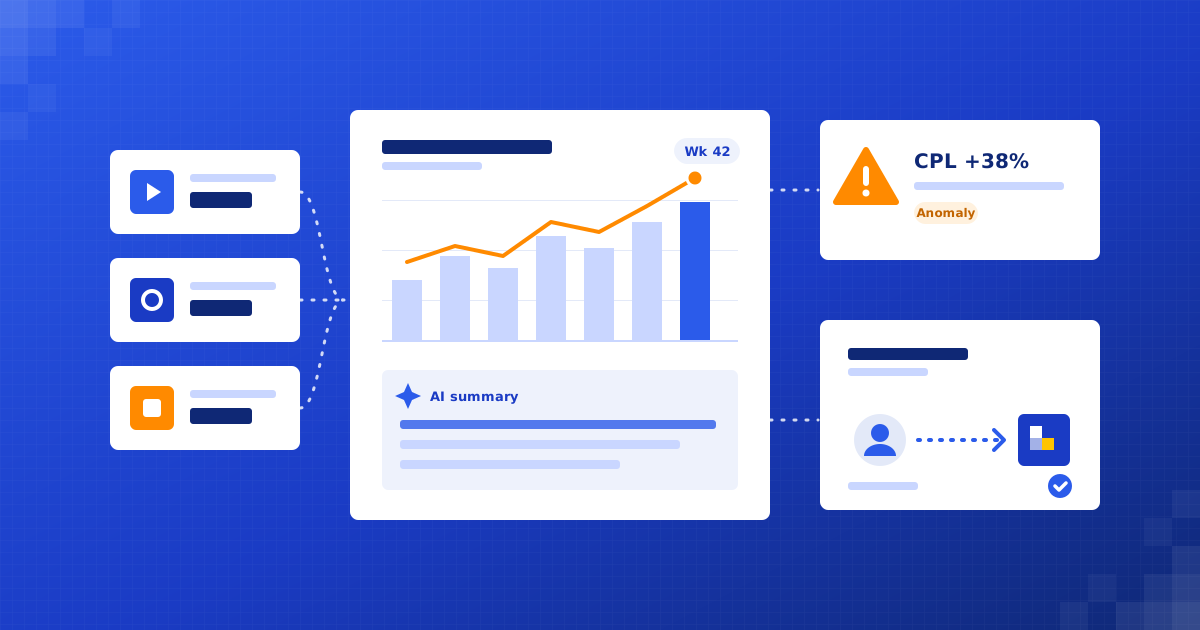
Client reports built from ad and analytics data each week, with plain-English commentary, anomaly alerts and campaign leads sent to clients in seconds.
The problem
A 14-person performance marketing agency in Pune running paid ads and SEO for around 30 retainer clients in India and the UK.
- Send every client a consistent weekly report without anyone building it by hand.
- Catch spend, conversion and tracking problems within the day they start.
- Get every campaign lead to the right client in under a minute and learn which leads turned into business.
How it works
Agency Reporting Engine, step by step
- 01Nightly data pulln8n + Google Ads, Meta Ads and GA4 APIs
- 02Anomaly checksn8n + Slack
- 03Report assemblyLooker Studio + Google Slides
- 04AI commentary draftOpenAI API
- 05Account manager approvalSlack + Notion
- 06Report deliveryGmail + HubSpot
- 07Instant lead routingMake + WhatsApp Business API
- 08Lead quality feedbackWhatsApp Business API + Google Ads offline conversions
Full project details +Hide details −
The situation
Every Monday, account managers export numbers from Google Ads, Meta Ads and GA4 into slides, write a short commentary and email them out. Lead-gen campaigns drop leads into a shared inbox or a Google Sheet, and someone forwards them to each client by hand, often hours later. Clients rarely say which leads were any good.
Monday mornings go on copying numbers into slides instead of improving campaigns.
Spend spikes, broken tracking and paused ads are spotted days late, usually by the client.
Leads reach clients hours after they come in, by which time the prospect has called a competitor.
There is no structured feedback on lead quality, so campaigns are optimised for volume, not good leads.
Each step
1. Nightly data pull. Each night, spend, clicks, conversions and sessions are pulled per client account and stored with the date and currency, so reports for UK and Indian clients stay in the right currency.
2. Anomaly checks. Each metric is compared with its own recent range. A sudden spend jump, a conversion count of zero, or a campaign that paused itself raises an alert to the account manager in Slack with the account and the numbers involved.
3. Report assembly. On Sunday night, a report is built per client from a shared template: headline numbers, week-on-week change, top campaigns and a chart for each channel the client actually uses.
4. AI commentary draft. An AI model writes three to five plain sentences on what changed and why it likely happened, using only the numbers in the report. It is told not to invent causes and to flag when data looks incomplete.
5. Account manager approval. The account manager gets a Monday morning list of drafts to check, edit and approve in one click. Nothing goes to a client unapproved.
6. Report delivery. Approved reports are emailed as a PDF and a live link at the time each client prefers, and logged against the client record.
7. Instant lead routing. Website forms and Meta and Google lead ads are captured as they arrive, checked against the last 30 days by phone and email to drop duplicates, and sent to the client's sales contact by WhatsApp, email or straight into their CRM.
8. Lead quality feedback. Each lead message carries simple buttons: good, not relevant, already a customer. Replies feed back into the agency's sheet and, where allowed, into offline conversion uploads so ad platforms learn which leads matter.
What we build
Client data store. One table per client with daily metrics from every channel, so reports and alerts read from the same numbers.
Anomaly rules. Simple per-metric thresholds based on each account's own history, editable by account managers without touching code.
Report template. A branded template that shows only the channels a client uses and keeps the layout identical week to week.
Commentary assistant. An AI step that drafts commentary from the report numbers only, with a fixed tone guide and a rule to say when it is unsure.
Lead router. Captures, de-duplicates and delivers leads to each client's preferred channel, with a fallback email if WhatsApp fails.
Connects to: Google Ads, Meta Ads, Google Analytics 4, Looker Studio, Google Slides, OpenAI API, Slack, WhatsApp Business API, HubSpot, n8n.
People stay in control
Account managers approve every report and commentary before it is sent.
Anomaly alerts go to a person, who decides whether to pause spend or call the client.
Clients mark lead quality themselves; the system never guesses it.
New clients are added through a short checklist owned by the operations lead.
Rollout
Week 1: Audit and data access. Map every client's channels, report format and lead sources. Set up read-only API access and agree the report template with the team.
Week 2: Data pipeline and alerts. Build the nightly pull and anomaly checks for five pilot clients, and tune thresholds so alerts are useful, not noisy.
Week 3: Reports and commentary. Generate reports and AI drafts for the pilot clients in parallel with the manual reports, and compare them side by side before switching over.
Week 4: Lead routing and full rollout. Switch on lead routing with feedback buttons, bring the remaining clients across in batches, and hand over a short runbook.
Where the value comes from
Account manager time. Hours spent building slides move to reviewing a draft, which frees senior people to work on strategy and new business.
Wasted ad spend. Overspend, broken tracking and paused campaigns are caught the same day rather than at the next report, so less budget is burned on problems.
Client lead conversion. Clients call leads while they are still warm, which tends to lift the share that become customers and makes the agency's results look better.
Campaign quality. Lead quality feedback lets the team optimise for leads that buy, not just cheap form fills.
Client retention. Consistent, on-time reports and early warnings build trust, which is what keeps retainers renewing.
What to measure: Hours per week spent on client reporting; Share of reports sent on time each Monday; Time from anomaly start to alert; Median time from lead submission to client delivery; Share of leads with quality feedback from the client.
Your numbers
What could this be worth to you?
These are your inputs, not our claims. Change any number to match your business.
Time and money saved, estimated
₹37,800
per month · ₹4,53,600 per year
About 63 hours of manual work handled for you each month.
What does a system like this cost?
Every agency's channels and report formats differ, so we give a fixed quote after a free 30-minute audit. No hourly billing surprises.
Is client data safe with an AI model writing commentary?
Only aggregated campaign numbers are sent to the AI step, never lead personal data. API access is read-only, credentials stay in your accounts, and lead data is kept only as long as you need it.
We use different tools, like LinkedIn Ads or a different CRM. Does it still work?
Yes. The design is the same; we swap the connectors. LinkedIn Ads, Microsoft Ads, Pipedrive, Zoho and most CRMs with an API can be plugged in.

Find your first automation in 30 minutes.
Free audit. Fixed quote after. No surprises.
Book free audit ↗