Bengaluru Tech Summit 2026: what tech teams should automate next
BTS 2026 is three days of good conversations. Here's how a startup can make them count, and the busywork worth automating once you're back at your desk.

Shubham Naliyapara · Business & Sales Expert
· 8 min read
Short answer
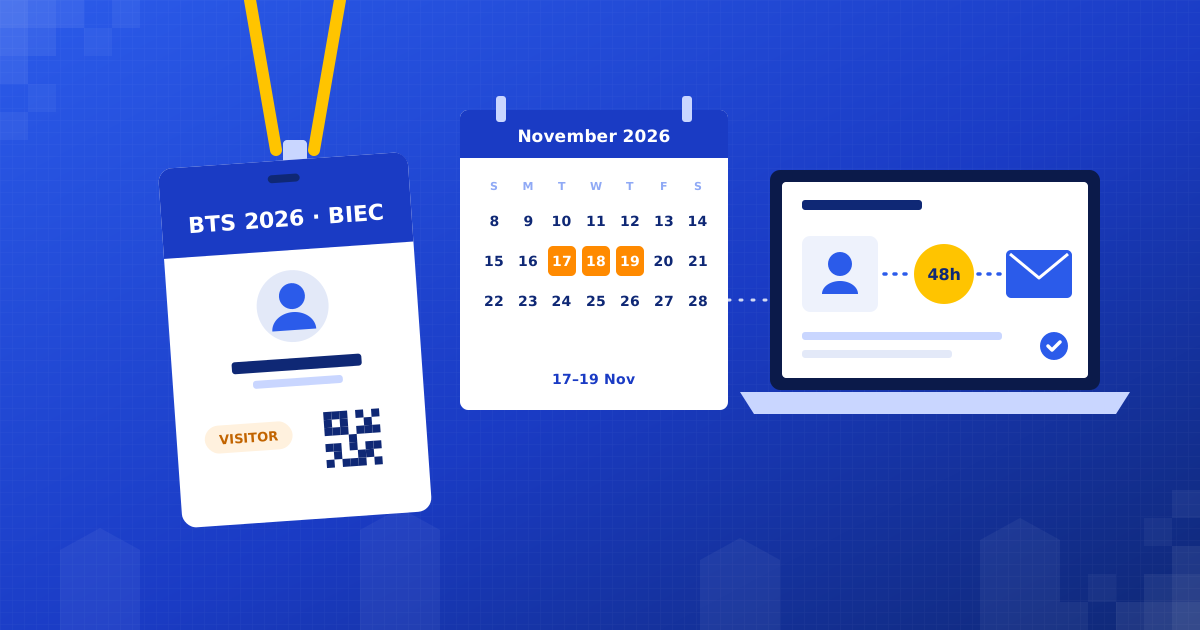
Bengaluru Tech Summit 2026 runs from 17 to 19 November 2026 at the Bangalore International Exhibition Centre (BIEC) on Tumkur Road, organised by the Government of Karnataka. For tech startups, the summit is most useful if you book meetings beforehand and follow up every conversation within 48 hours, and the follow-up itself is one of the first things worth automating, along with demo-request replies, support triage, finance admin and investor reporting.
Bengaluru Tech Summit 2026: the quick facts
If you're searching for BTS 2026 details, here is what's confirmed and worth putting in your calendar.
- Dates: 17 to 19 November 2026.
- Venue: Bangalore International Exhibition Centre (BIEC), Tumkur Road, Bengaluru.
- Organiser: the Government of Karnataka, through its Department of Electronics, IT, BT and S&T.
For the programme, speakers, exhibitor list and registration options, go to the official Bengaluru Tech Summit website. They're updated closer to the event, and we'd rather point you there than repeat details that might change.
Is BTS 2026 worth attending for a startup?
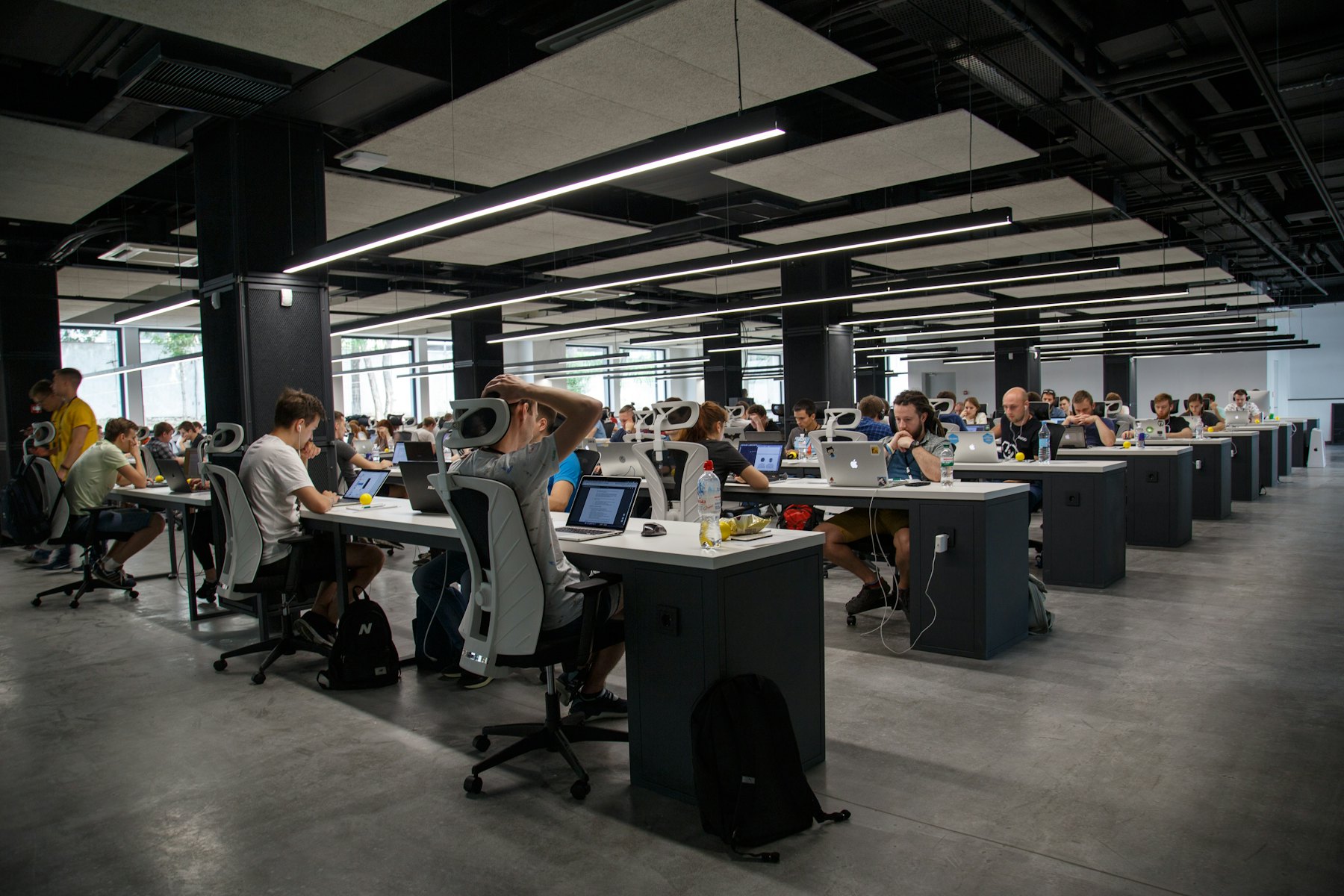
It can be, if you treat it as a place to have specific conversations rather than a place to walk around. Large tech events bring founders, buyers, investors, partners and government teams into one building for a few days. That's rare, and it's useful.
The startups that get the most out of an event like this tend to do three things. They decide in advance who they want to meet. They book as many of those conversations as they can before they arrive. And they follow up quickly, while people still remember the chat.
The startups that get the least out of it go home with a pocket full of business cards and a vague plan to “reach out next week”. Next week turns into next month, and the conversations go cold.
How do you prepare your meetings before the summit?
Most of the value of an event is decided before you get there.
- Write down what you want from the three days. A handful of design partners, a few investor intros, two hiring conversations. Be specific.
- List the people or companies that match. Check who's speaking or exhibiting once the official list is out, and look at your own network for people who'll be in Bengaluru that week.
- Send short, personal messages two to three weeks ahead asking for 20 minutes. Say why you want to meet and what's in it for them.
- Keep one shared sheet or CRM view for the event: who you're meeting, when, where, and what you want to learn.
- Prepare a one-line note for each meeting. What do they care about? What would a good next step look like?
Why the 48 hours after the summit matter most
Every person you met at BTS met dozens of other people too. Within a couple of days, the details start to blur. A follow-up that arrives within 48 hours, and mentions what you actually talked about, stands out. One that arrives ten days later reads like a cold email.
This is exactly the kind of task that falls apart by hand. You're tired, your inbox has piled up and the product team needs you. So the follow-ups get written in batches, late, and they all sound the same.
It's also a task that suits automation well, because the steps are the same each time:
- During or after each conversation, capture a quick note: a voice memo, a line in your phone, or a photo of their card.
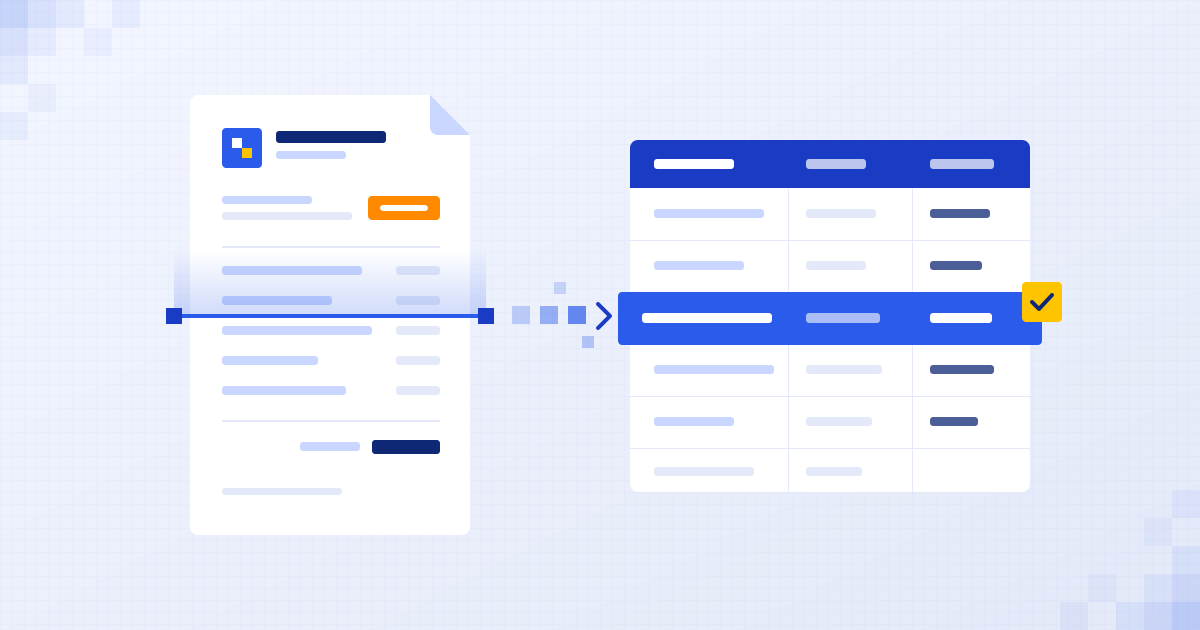
- An automation turns each note into a contact in your CRM with the company, what you discussed and the agreed next step.
- AI drafts a short, specific follow-up for each person in your tone, referencing the conversation.
- You read and send each draft, or edit it first. Nothing goes out without you seeing it.
- Anyone who hasn't replied after a few days gets a gentle reminder in your task list, not an automatic chaser.
The drafting and logging are automated. The relationship stays yours. We've written more about this pattern in our guide to replying to every lead fast, at /blog/reply-to-leads-fast/.
What busywork slows down product companies?
Events are a good moment to step back and look at how your team spends its week. In most tech startups we talk to, the same four areas come up.
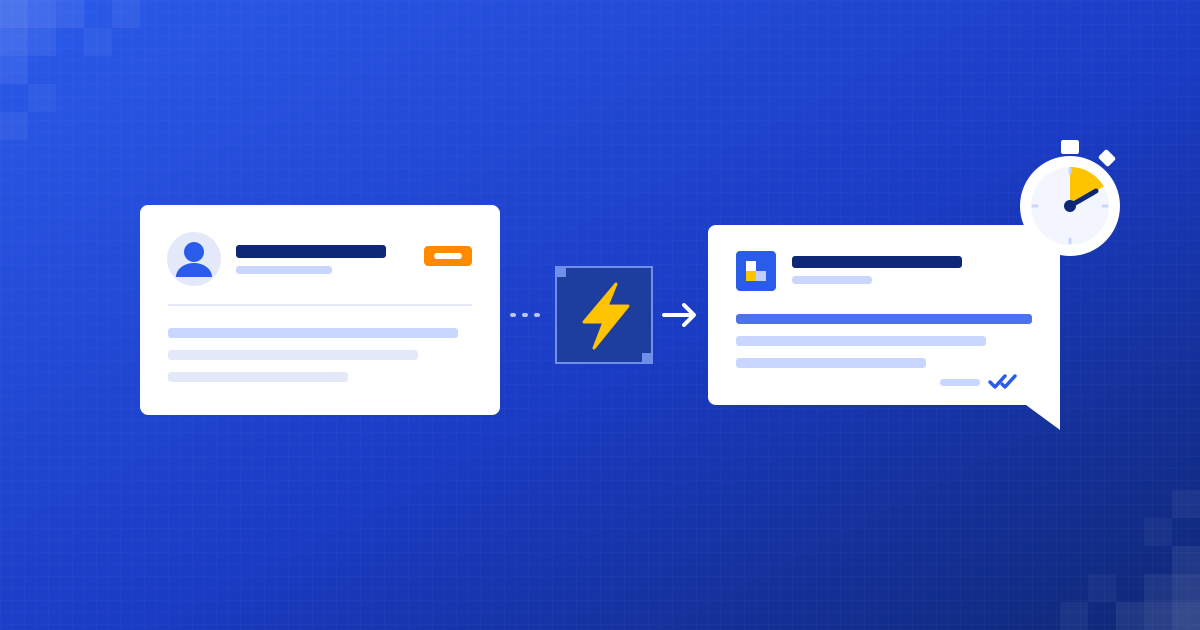
- Demo requests. Someone fills in the form on your site, and it sits in a shared inbox until a founder or salesperson has time. A slow reply here costs real pipeline.
- Support triage. Tickets and messages arrive in several places. Someone has to read each one, work out if it's a bug, a how-to question or a billing issue, and send it to the right person.
- Finance admin. Matching payments to invoices, chasing overdue accounts, collecting receipts for expenses and preparing numbers for the accountant.
- Investor and board reporting. Every month or quarter, someone pulls figures from the billing system, the CRM and the product analytics into a deck, and rewrites the same commentary.
None of these are core product work. All of them land on people who should be building, selling or talking to customers.
What should a tech team automate first?
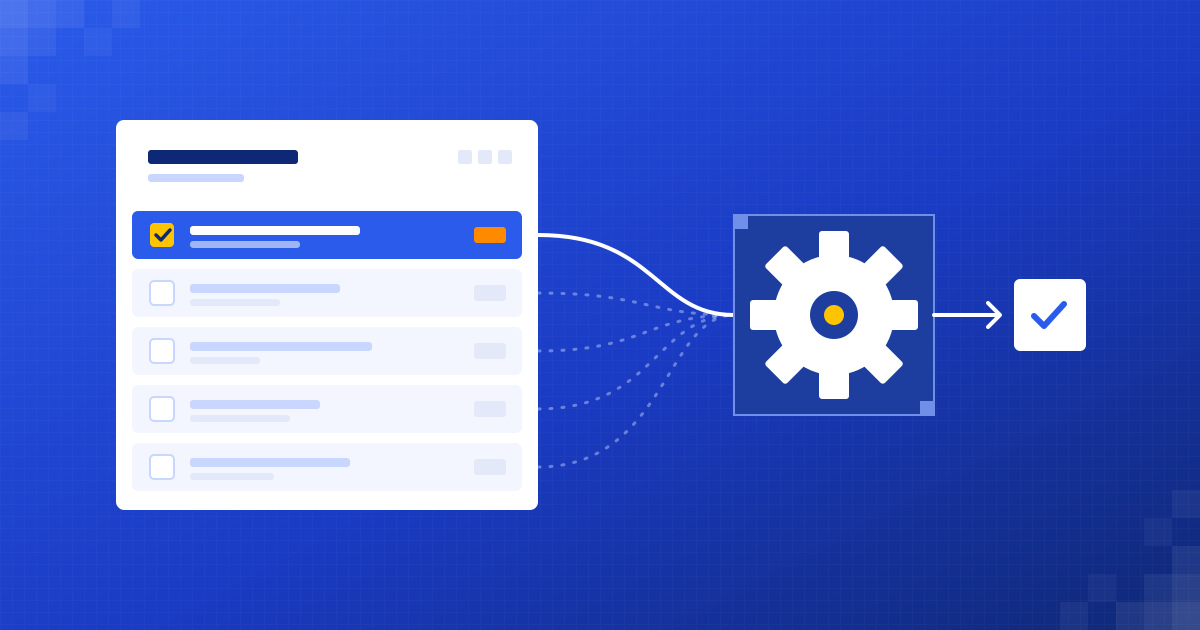
Not everything on that list deserves automating, and not all at once. Here's a simple test we use. Score each task from one to three on four questions:
- How often does it happen? Daily scores higher than monthly.
- Does it follow roughly the same steps each time?
- Is the information it needs already digital, in a form, inbox, CRM or database?
- How much does a delay or mistake cost you? A lost demo lead costs more than a late expense report.
Add the scores. The task with the highest total is usually your first automation. If two tasks tie, pick the one where the person doing it today is most fed up. They'll help you test it properly.
For most early-stage product companies, demo-request replies or event follow-ups come out on top, because they happen often and the cost of being slow is easy to see. For a slightly larger team, support triage often wins. Our longer guide on what to automate first, at /blog/what-to-automate-first/, walks through the same thinking for any kind of business.
Automate the task that happens most often and hurts most when it's late, not the one that sounds most impressive.
Build, buy or have it built?
Tech teams have an option most businesses don't: they can build internal tools themselves. Sometimes that's the right call. Often it isn't, and the reason is engineering time.
Every week an engineer spends wiring up a lead-routing script or a reporting pipeline is a week not spent on the product your customers pay for. Internal tools also need looking after. When the CRM changes its API or the finance team adds a new field, someone has to fix it, and that someone is usually pulled off something more important.
A rough way to decide:
- Buy an off-the-shelf tool when the problem is common and the tool fits without much bending. Plenty of support and finance tools do one job well.
- Build it yourself when the workflow is close to your core product, or depends on data and logic only your team understands.
- Have it built when the task sits between your tools, needs some AI judgement and doesn't justify pulling an engineer off the roadmap.
There's no shame in any of the three. The mistake is drifting into building something because it felt quick, then maintaining it for years.
Meet us at BTS 2026
We're visiting Bengaluru Tech Summit 2026. We're not exhibiting, so there's no stand to find. If you'd like to talk about what your team could automate, book 20 minutes with us during the summit at /bts-2026/ and we'll meet you there.
Can't make it, or not going? Our free 30-minute automation audit runs online any week of the year. Book it at /free-automation-audit/. You'll talk to the people who'd build it, and you'll get a short written summary and a fixed quote afterwards, with no obligation. You can also browse examples of what we build at /work/.
Questions people ask
When and where is Bengaluru Tech Summit 2026?
BTS 2026 takes place from 17 to 19 November 2026 at the Bangalore International Exhibition Centre (BIEC) on Tumkur Road, Bengaluru. It's organised by the Government of Karnataka's Department of Electronics, IT, BT and S&T.
Is BTS 2026 worth attending for startups?
It can be, if you go with clear goals, book meetings in advance and follow up within 48 hours. Startups that just walk the halls tend to get much less out of it.
What can a SaaS team automate?
Common starting points are replying to demo requests, triaging support messages, finance admin such as payment matching and reminders, and pulling numbers together for investor or board updates.
How should you follow up leads after a tech event?
Log each conversation the same day, send a short, specific follow-up within 48 hours that mentions what you discussed, and set a reminder for anyone who hasn't replied. Drafting and logging can be automated while you still review every message before it goes out.
Written by
Shubham Naliyapara
Business & Sales Expert at Dizilus. You talk to the people who build your automations, not a sales rep.